
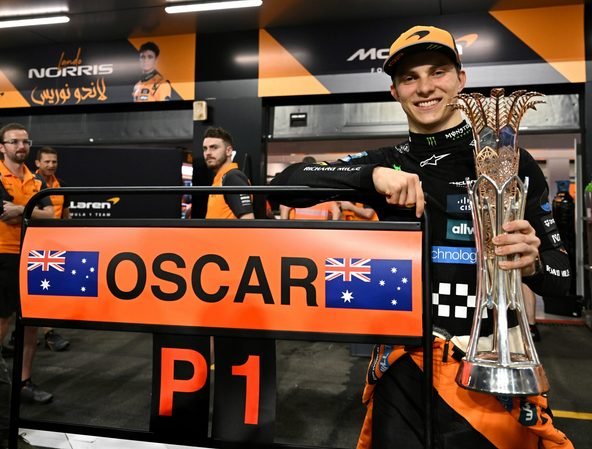
The 2022 Oscar Piastri contract saga remains one of the most significant legal driver contract blunders in modern motorsport history. It was adjudicated by the FIA’s Contract Recognition Board (CRB), an independent tribunal of international contract lawyers.
The unanimous ruling in favour of McLaren exposed severe administrative and legal failures on Alpine’s side, while demonstrating a masterclass in exploiting contractual loopholes by Piastri’s team, led by former F1 driver Mark Webber.
1. The Legal Reality: Why Alpine Lost
Alpine’s primary legal downfall was confusing a non-binding proposal with a binding employment contract.
The “Terms Sheet” Illusion: Alpine argued they had a valid contract for 2023 based on a “Terms Sheet” signed in November 2021. However, the CRB determined this document was explicitly a preliminary framework. It was intended to establish the outline for future negotiations, not to act as a binding, final employment contract.
The Missing Pieces: For a contract to be legally enforceable, there must be a clear offer, acceptance, intention to create legal relations, and definitive terms. Alpine repeatedly delayed turning that Terms Sheet into an actual legally binding F1 contract.
The Regulatory Loophole: Under F1 rules, all valid driver contracts must be officially lodged with the CRB. Alpine had only lodged Piastri’s 2022 Reserve Driver contract, which legally expired on December 31, 2022. They had absolutely nothing lodged or legally bound for 2023 or beyond.
The Free Agent Reality: Because Alpine failed to execute a binding 2023 extension by the internal deadlines, Piastri became a legal free agent. On 4 July 2022, he legally signed a watertight, valid contract with McLaren.
2. What Alpine Should Have Done Differently
Alpine’s management treated contract negotiations with a relaxed, low-urgency approach, assuming “loyalty” because they had funded Piastri’s junior career. Legally, they should have:
Executed a Single, Comprehensive Agreement: Instead of separate, piecemeal agreements (a reserve deal here, a vague future deal there), Alpine should have signed a multi-year master contract during his F2 days. This master contract should have automatically triggered an F1 race seat or a mandated loan placement under strict conditions.
Met Contract Deadlines: Mark Webber and Piastri’s legal team repeatedly asked Alpine for the actual contract drafts throughout early 2022. Alpine missed several self-imposed deadlines to deliver the paperwork, directly creating the window of frustration that pushed Piastri to look elsewhere.
Avoided the “Williams Loan” Trap: Alpine tried to place Piastri at Williams for 2023 to keep Fernando Alonso for another year. However, they didn’t have the contractual right to force Piastri into a backmarker team against his will without a signed agreement permitting them to do so.
3. What Piastri’s Side Could Have Done Differently
From a cold, legal standpoint, Piastri and Mark Webber played their hand perfectly. They followed the letter of the law, identified the free agency window, and secured a highly coveted seat at McLaren. However, from a reputational and PR management standpoint, things could have been handled cleaner:
The Nuclear Tweet: On 2 August 2022, Alpine prematurely announced Piastri as their 2023 driver. Hours later, Piastri released a viral tweet flatly denying it, stating: “I will not be driving for Alpine next year.” While legally accurate, the public denunciation burned bridges with the team that spent millions funding his junior career.
Earlier Formal Communication: Piastri’s camp signed with McLaren on 4 July, but Alpine was left entirely in the dark for nearly a month. If Piastri’s side had issued a formal legal notice to Alpine in June stating, “As you have failed to provide a binding contract by the deadline, we are terminating negotiations,” the subsequent public relations fallout and Alpine’s embarrassing false announcement would have been entirely avoided.
The fallout from the Oscar Piastri case completely revolutionized how F1 legal teams draft junior driver agreements. Before the saga, teams heavily relied on vague “letters of intent,” handshake loyalty, and loose terms sheets while delaying formal paperwork.
Today, teams use highly aggressive “Piastri-proof” contract structures to ensure an academy star cannot legally walk away.
At Magnetize, we maintain a strategic partnership with a leading Hereford law firm, specialists in sports contracts. They provide senior legal counsel to review agreements and deliver experienced representation in the event of disputes or complex legal issues.
To make room for Oscar Piastri, McLaren had to navigate a complex legal settlement to prematurely terminate Daniel Ricciardo’s contract for the 2023 season.
Because Ricciardo held a strict “driver-option” clause for 2023, McLaren could not simply fire him. Instead, they reportedly negotiated a massive $18 million buyout settlement to mutually dissolve the agreement early. While this was a staggering financial hit for the team, the legal maneuver allowed McLaren to cleanly exit a performance slump, clear their grid slot, and secure Piastri as a free agent without facing a breach-of-contract lawsuit.